Background
The MEV Committee is a grants-funded initiative to help the community enforce a social mitigation strategy against malicious block proposers. The committee was assigned to actively monitor, analyze, and report any potential MEV activity, so that the community may respond appropriately to bad actors.
All reports are shared with the community, offering insights into our on-chain findings, actions taken to address any issues, and improvements to our workflows. In case of malicious activity, these reports also detail the incident, the parties involved, and provide recommendations for any retroactive measures the community should consider. We welcome any feedback or questions on the report!
Last three months activity
We’ve been closely monitoring and waiting to share the report to have enough data after the proposal to reduce the designated validator set passed. We expected this to have a clear effect on the order book discrepancy of the platform, a positive one, since a reduced validator set means lower latency in moments of increased network traffic.
This outcome has been validated, with the exception of the already discussed incident of October 10, which had nothing to do with misbehavior by any of the parties. Overall, the average order book discrepancy has been reduced considerably and all of the proposed validators have shown no signs of misbehavior either.
Volume and order book discrepancy
We can identify two different periods here, one before october 1 (when reduced validator set was applied), and one after that period. We expect to see average order book discrepancy for the same volumes to go down.
The first image shows the daily volume in dYdX, the second one the daily order book discrepancy and finally the ratio between volume and order book discrepancy. Out of the current numbers displayed, we have two conclusions:
-
A relevant spike in order book discrepancy took place in October 10, which we could expect after the highest liquidation day in crypto history
-
During november, when volumes in dYdX have spiked, we see the ratio stable, meaning the reduced validator set was able to handle successfully the spike in orders without compromising much in order book discrepancy.


Empty Blocks and average discrepancies
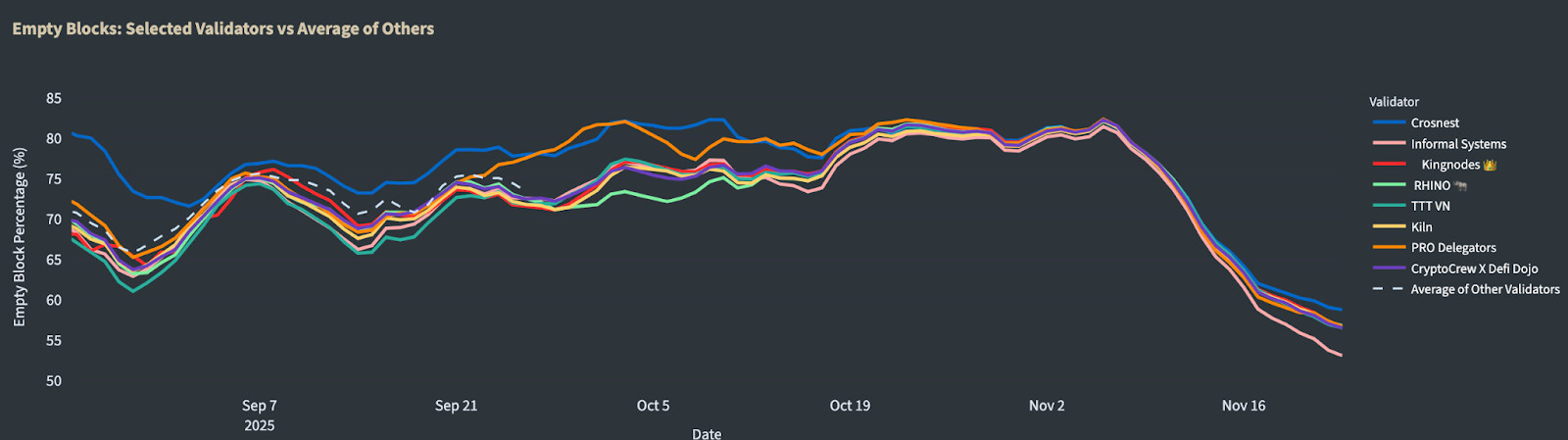
As we have been doing in previous reports, when looking at empty blocks (which involves validators proposing blocks with no matched orders) we see that the performance by all the validators in the designated set has increased dramatically, now showing no difference between validators.
This is a healthy signal when coupled with another metric we’ve been using during past reports: average order book discrepancy.
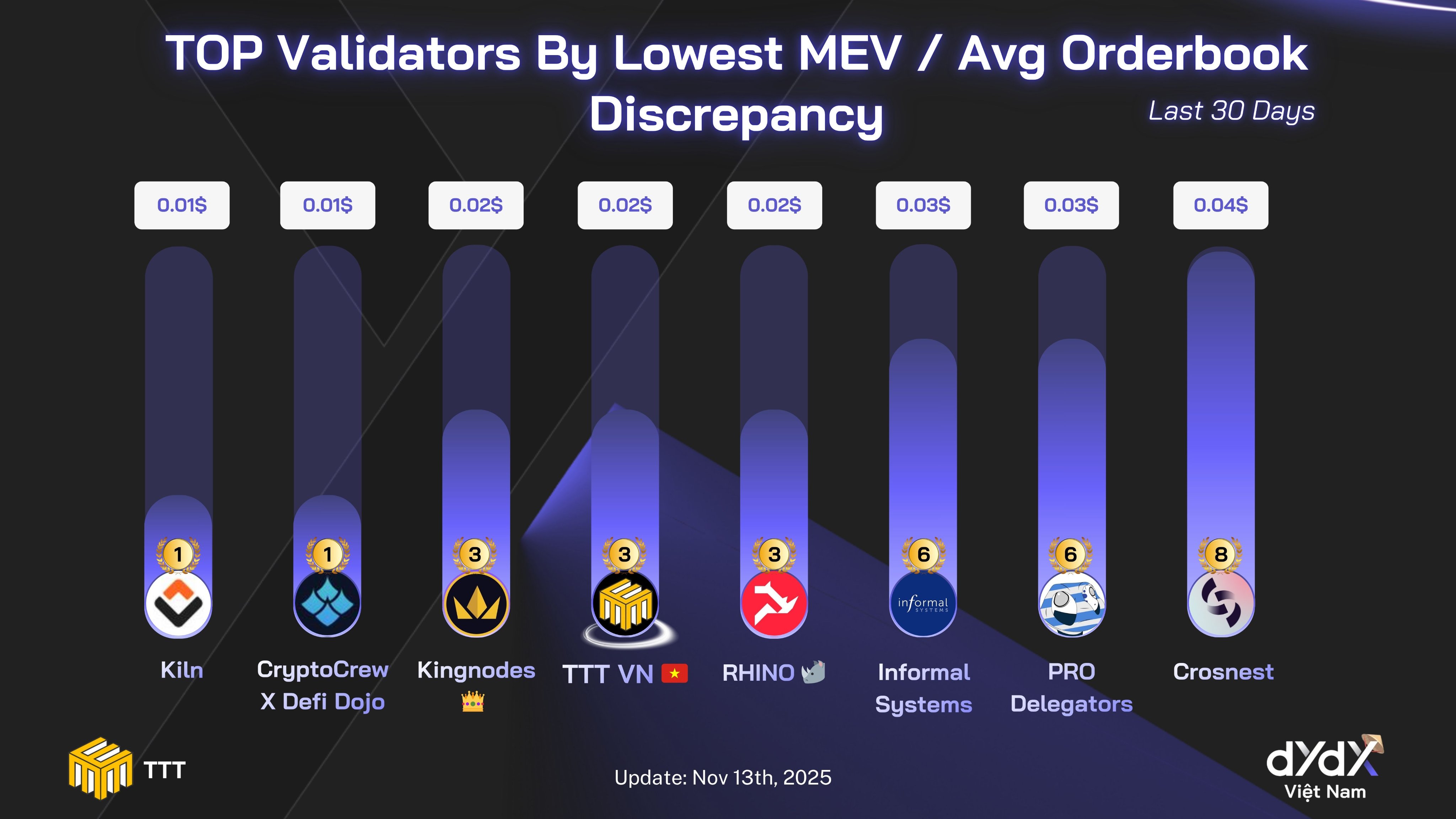
When examining trending averages for orderbook discrepancies across validators, we observed that all validators are behaving accordingly. We do see some slight differences between them, and we will keep a close look in case we detect any issue, but the order of magnitude is way lower than what we were seeing months ago.

High Discrepancy Blocks
During the last three months, we identified several blocks with above-average orderbook discrepancies. However, after analysis, none appeared to result from malicious activity. The majority of these discrepancies occurred during the October 10 incident, after the unprecedented liquidation event that affected the entire crypto market. Beyond this singular event, we observed minimal discrepancies throughout the reporting period.
Additionally, following the implementation of the reduced validator set, we detected no instances of suspicious activity or patterns suggesting potential malicious behavior from any validators. The decline of significant single-block discrepancies during this period, particularly during November’s volume spike, shows the improved network stability and the positive impact of the reduced validator set.
Future outlook
The committee will continue refining its ability to detect discrepancies, engage with validators, and develop new metrics to uncover underlying issues. Feedback and collaboration from the community are vital as we work towards a more secure and equitable dYdX ecosystem.